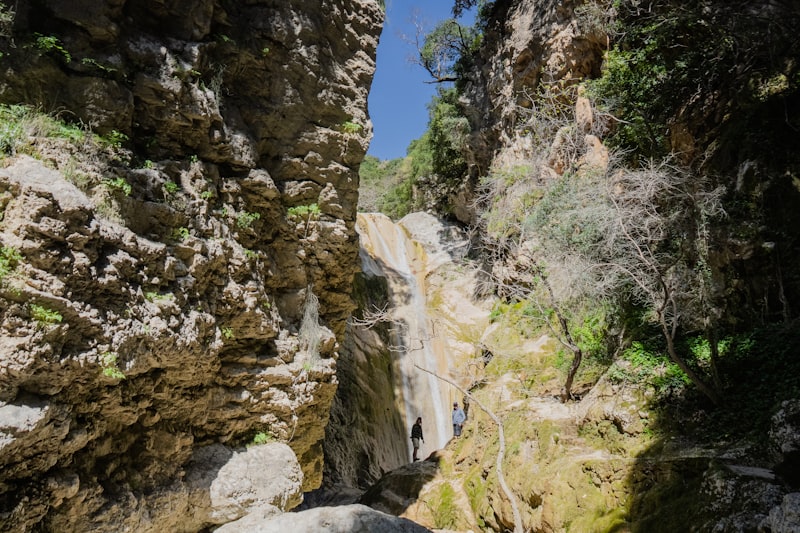
#1 · 30 m drop
Ayn Ghedh
Salalah · Dhofar Governorate · Oman
Ayn Ghedh cascades through the dramatic limestone landscapes of the Dhofar Mountains in southern Oman, creating one of the Arabian Peninsula's most enchanting natural spectacles. This seasonal waterfall comes alive during the khareef monsoon season, typically from June through September, when moisture-laden clouds sweep inland from the Indian Ocean. The falls plunge approximately 30 metres over moss-covered rock faces into crystalline pools surrounded by lush vegetation—a stark and beautiful contrast to the arid desert that dominates much of the region. The name 'Ayn Ghedh' translates to 'spring of Ghedh,' reflecting the area's reputation as a verdant oasis where frankincense trees and wild fig flourish in the mist.
Reaching Ayn Ghedh requires a journey to the Salalah region in Dhofar Governorate, roughly 40 kilometres northeast of Salalah city. The waterfall is accessible via a scenic drive along mountain roads that wind through the Jebel Qara range. From the main parking area near Tawi Atair sinkhole, visitors follow a moderately challenging trail that descends through rocky terrain and vegetation. The path can be slippery during the monsoon season, so sturdy hiking boots with good grip are essential. The hike typically takes 30-45 minutes each way, with several viewpoints offering spectacular vistas of the surrounding wadis and the distant Arabian Sea.
The optimal time to visit Ayn Ghedh is during the khareef season when the waterfall flows most vigorously and the entire mountainside transforms into an emerald wonderland shrouded in mist. During this period, temperatures are remarkably mild for Arabia, ranging between 20-25°C, making hiking conditions pleasant. Outside the monsoon months, the waterfall may reduce to a trickle or dry up entirely, though the surrounding geological formations and frankincense groves remain fascinating year-round. Early morning visits offer the best lighting for photography and cooler temperatures, while also providing opportunities to spot Arabian leopards' tracks, though sightings of these critically endangered cats are extremely rare.