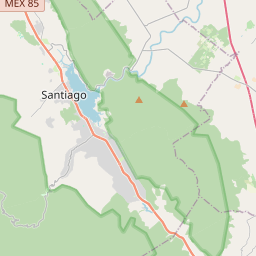
Most people who visit Monterrey are surprised by how quickly the city gives way to mountains. You can be sitting in traffic near the Macroplaza one hour and standing under a waterfall in the Sierra Madre Oriental the next. Cascada Cola de Caballo is the reason a lot of those day trips happen, and it has been pulling in regiomontano families on Sunday outings for longer than most of them can remember. The name translates to Horsetail Falls, and it earns it. The water doesn't drop in one clean sheet — it fans out over the rock face on its way down, splitting into thin white strands that really do look like a tail caught mid-swish. It's not the tallest waterfall in Mexico, and it won't remind anyone of Niagara. What it has going for it is setting: a narrow limestone canyon inside Cumbres de Monterrey National Park, thick with vegetation, with the falls arriving almost without warning after a short walk from the parking area. Where it actually is The waterfall sits just outside Villa de Santiago, a Pueblo Mágico about 40 kilometres south of Monterrey, tucked into the Sierra Madre Oriental. It falls inside the boundaries of Cumbres de Monterrey National Park, which is why the area around it has stayed as green as it has despite how many visitors pass through on a busy weekend. Sources differ slightly on the exact height — some list it at 25 metres, others closer to 27 — which works out to somewhere around 82 to 88 feet. Either way, it's not a waterfall you visit for sheer scale. You visit it because the whole approach, from the drive through the mountains to the last stretch of trail, feels like a proper escape from the city. Getting there from Monterrey The most straightforward route is by car, heading south out of Monterrey along Carretera Nacional 85 toward Santiago. The drive takes roughly 45 minutes to an hour depending on where in the city you start and how the traffic through Allende and Santiago is behaving that day. There's low-cost parking at the entrance to the trails, and from some of the hotels closer to the highway on the Santiago side, it can take under 15 minutes. If you don't have a car, buses run between Monterrey and Villa de Santiago, and from there you can pick up a taxi or a local tour vehicle for the last leg. Plenty of tour operators in downtown Monterrey also run half-day and full-day trips out to the falls, usually bundled with a stop in Santiago itself or at the La Boca dam, which makes life easier if you'd rather not deal with directions in a second language. What to expect once you're there This part surprised me a little the first time — the walk to the waterfall itself is short. It's a paved, fairly gentle path, and most people cover it in twenty to thirty minutes at an easy pace, which makes it genuinely manageable for kids, grandparents, or anyone who just doesn't fancy a hike. You can also skip the walking altogether and hire a horse-drawn cart or ride a horse up to the falls, which locals have been offering for decades and which the AllTrails reviews mention as being surprisingly well looked after — someone's job, apparently, is cleaning up after the horses along the route. Once you reach the main viewing area, you can get close enough to feel the spray on a warm day, which after that walk is usually welcome. There are steps and platforms at different levels so you're not all crowded onto one lookout, and if you keep going a little further into the park there are smaller cascades and pools worth poking around. The site has grown well beyond "just a waterfall" over the years. There's a zip line setup called the Roller Zip that's more like a hybrid between a zip line and a small roller coaster, hanging bridges, and — for the braver visitors — bungee jumping from a platform roughly 70 metres up. None of that is required, obviously. Plenty of people show up, look at the falls, eat something, and head home perfectly satisfied. Prices, hours, and the boring but useful stuff The park is open daily, generally from around 9am to 6pm. Entry has hovered around 40 to 50 pesos per adult in recent years, and children under four usually get in free — though prices do get reviewed periodically, so it's worth treating that as a ballpark rather than gospel. If you're driving, expect a small separate parking charge, typically somewhere around 30 pesos. Rainy season, roughly June through September, is when the falls are at their fullest and most dramatic. Visit in the dry months and the flow is noticeably thinner, though the setting is still lovely and the crowds tend to thin out too. Whatever time of year you go, wear shoes with some grip — the paths near the water get slick — and bring sun protection and water, because the canyon traps heat more than you'd expect from the shade of the trees. Making a weekend of it If you've got more than a day, this part of Nuevo León rewards slowing down. Villa de Santiago itself is worth wandering — it's one of the state's official Pueblos Mágicos, with a colonial-era parish church, stone streets, and a strong local reputation for handmade crafts and regional sweets called glorias. Presa La Boca, a reservoir a short drive away, is a good spot for a boat ride or just sitting by the water with something to eat. There's also Cascada El Chipitín nearby, a smaller and much quieter waterfall for anyone who wants a second stop without the crowds. One thing I'd genuinely recommend: instead of doing this as a rushed day trip from the city, look at renting a small place up in the hills around Santiago for a night or two. Airbnb has a decent spread of cabins in the area, and waking up already in the mountains — rather than fighting traffic out of Monterrey first thing — changes the whole pace of the trip. Pair it with a proper carne asada or a plate of cabrito at one of the restaurants near the park entrance, and it stops feeling like a tourist stop and starts feeling like an actual trip. Cola de Caballo isn't a hidden gem — it's one of the most visited natural sites in Nuevo León, and on a holiday weekend it can get properly busy. Go early if you want it quieter, or don't, and just accept that this is one of those places locals bring their whole extended family to, and let yourself be one more group having lunch by the water.
Cascada Cola de Caballo


Waterfall height
Plan your visit to Cascada Cola de Caballo
Please verify on the official website before you go
Why is Cascada Cola de Caballo famous?
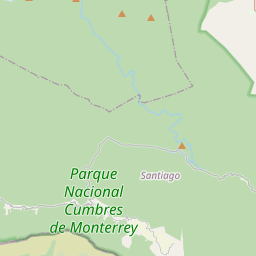
Cascada Cola de Caballo (Horse Tail Waterfall) is one of Nuevo León's most popular natural attractions, named for its resemblance to a horse's tail as water cascades 25 meters down the rock face. It sits within Parque Nacional Cumbres de Monterrey and has been a beloved weekend destination for generations of regiomontanos (Monterrey residents).
Can you swim at Cascada Cola de Caballo?
Unknown — please check the official website. Swimming policies can vary and conditions change. Please verify on the official website before you go.
Are dogs allowed at Cascada Cola de Caballo?
Unknown — please check the official website for current pet policies in Parque Nacional Cumbres de Monterrey. Please verify on the official website before you go.
Is Cascada Cola de Caballo free? Do you need a permit?
Entry fee applies (typically around 20–30 MXN per person, subject to change), plus separate parking fee. Please check the official website for current pricing. Please verify on the official website before you go.
Is there parking at Cascada Cola de Caballo?
Parking is available near the waterfall entrance with a small fee typically charged. The lot serves the commercial area with restaurants and horse rentals near the falls. Please verify on the official website before you go.
How long is the hike to Cascada Cola de Caballo?
Approximately 500 meters / 0.3 miles one-way from the parking area along a paved walkway, or visitors can ride horses to the base of the falls. Please verify on the official website before you go.
Cascada Cola de Caballo hike difficulty
Easy – paved, mostly flat walkway suitable for most visitors, though can be crowded on weekends. Horse riding is an alternative option. Please verify on the official website before you go.
When is the best time to visit Cascada Cola de Caballo?
Fall and winter (October–February) for best water flow after rainy season, when the 25-meter cascade is most impressive. Avoid summer heat. Please verify on the official website before you go.
Route and trail notes for Cascada Cola de Caballo
From the parking area, follow the paved walkway along the river through the commercial zone with food vendors and souvenir shops. The path leads directly to the base of the 25-meter waterfall. Horse rentals are available for those who prefer not to walk.
Cascada Cola de Caballo official website
Attractions near Cascada Cola de Caballo
- •Grutas de García – spectacular limestone caves with stalactites, about 30 km north
- •Pueblo Mágico de Santiago – charming colonial town with orange orchards, 5 km away
- •Presa de la Boca – large reservoir for boating and fishing, approximately 20 km north
- •Matacanes Canyon – adventure canyoneering and rappelling site in the Sierra Madre
- •Chipinque Ecological Park – hiking trails with Monterrey views, 40 km northeast
Safety information
Waterfalls can be unforgiving. Read these before you go — and please, use your judgement on the day.
Full safety guide →Questions & answers
No questions yet — be the first to ask.