The road into Salazie doesn't ease you in. One minute you're driving through Saint-André, and the next the walls of the cirque close in on both sides, green from top to bottom, with water running off them in places that don't even look like they should hold a waterfall. Cascade du Voile de la Mariée is the one everyone comes for, but it's really just the introduction to a day that keeps handing you more cascades than you can photograph. We started at 8am from a hotel on the west coast, which meant a decent drive before we even reached Salazie proper. Our driver stopped in Saint-Denis so we could pick up lunch at a supermarket, since options thin out fast once you're up in the cirque. By 10am we were in Salazie itself, at a small church with a garden attached. I'll be honest, we didn't dig into the church's history much. It's a modest building and we were eager to keep moving toward the waterfall everyone talks about. Finding the Voile de la Mariée Viewpoint We reached the main viewpoint by 11am, and it was already busy. This is the classic postcard spot: a roadside parking area, about a kilometre past Salazie village, just before the road splits toward Hell-Bourg on one side and Grand Îlet on the other. You can't really miss the waterfall from here, it's on the far side of a wide green cliff face, and it's why the falls got their name in the first place. Dozens of thin threads of water drop down the rock over a stretch of roughly 100 metres, and when there's been rain, the whole thing takes on that vaporous, veil-like look people compare to a bride's headpiece. That distance is both the charm and the limitation. From the viewpoint you get the full sweep of the falls in one frame, which is genuinely worth the stop. But if you want to get close, or shoot it from a different angle, you'd normally need the hiking trail that leads down toward the base, crossing the Rivière du Mât on a footbridge before climbing to Îlet Bananiers. Worth knowing before you go: Salazie's town council has restricted that trail on and off because of rockfall risk, so check locally whether it's actually open the day you visit rather than assuming you can walk down. A few of the local legends around the waterfall are worth a mention too, most involve a father, a runaway bride, and a fall from the cliff that left her veil caught on the rock forever. Take it as folklore rather than history, but it explains a name that would otherwise seem a bit random. The Drive Up, With Waterfalls on Both Sides By 11:30am we were climbing further into the cirque, and this stretch of road turned out to be one of my favourite parts of the whole day, even though it wasn't on the itinerary as a "sight." The route passes a string of smaller falls that feed into the same system as the Voile de la Mariée, and at points you've got water dropping on both sides of the car at once. Somewhere along this road we also caught a glimpse of Cascade Blanche, the White Waterfall, off in the distance. It's the tallest of the two by a good margin. At around 640 metres, it's actually the third-highest waterfall in France and its overseas territories, technically located in the neighbouring commune of Bras-Panon but visible enough from the Salazie road that most people lump it in with the same day trip. Hell-Bourg, in Macaron Colours We got to Hell-Bourg around 12:20pm, and parking was tight, which seems to be a running theme in this valley. There's a strip of shops selling souvenirs and quick food, and a walk through the streets brings you to a garden by the town hall. It's a small village, easy to see in an hour, and the houses really do look like something out of a French storybook, all painted in soft pastel shades that our driver called "macaron colours." He mentioned that a lot of the little cottages here can be rented out for holidays, and standing in that quiet garden, it wasn't hard to picture why. Hell-Bourg was once a spa town too, built up around a hot spring discovered in the 1830s, and there's still something of that unhurried, take-your-time atmosphere left in the place, the kind of pace the French seem to protect wherever they can. Lunch With a View, Then On to the Fairy Lake Around 1:40pm we reached a lookout point with a wooden picnic shelter and a view that made the stop worthwhile on its own. We ate quickly and kept moving, since the day's schedule was tighter than it looked on paper. The trailhead for Mare à Poule d'Eau came next, at about 2:30pm. It's a short walk, under two kilometres round trip with maybe 30 metres of elevation change, so nothing demanding. Locals also call it the fairy lake, and I understand why. The water was apparently much clearer here once, but the pool has become eutrophic over time and is now covered in a floating plant that looks almost like small heads of cabbage. Oddly, that's part of what makes it beautiful. The colour contrast between the green mat on the surface and the dark water underneath is striking, and there's something genuinely storybook about the scene, an elderly woman fishing with her grandchildren and their dog at the water's edge. We didn't finish the loop until around 4pm, closer to an hour and a half than the walk should have taken, partly because it started raining and we sheltered for a while. Winter afternoons in Salazie are humid and prone to sudden showers, and by the time we got back to the road I'd had enough walking for one day. We climbed back into the car and started heading down. One Last Look at Cascade Blanche On the way back down, on what I think was a different road than the one we'd taken up, we stopped at a lookout for Cascade Blanche around 4:30pm. It's not a formal viewpoint with railings or signage, more just a pull-off where cars can park, but the waterfall itself is genuinely spectacular up close, and knowing it's the tallest in the area made the stop feel like the right way to end the day. Tips for Visiting Salazie If you're planning your own trip between roughly May and September, try to get there in the morning. Cloud tends to build up over the cirque as the day goes on, and while it doesn't ruin the views, it does soften them. Rain is common regardless of when you go, so pack for it either way. Anyone with reasonable fitness should think about hiking rather than sticking to the roadside viewpoints, which only show you a fraction of what's actually there. Beyond the named waterfalls, Salazie is full of smaller, unmarked ones that you'll only catch by chance along the road, since most don't have proper pull-offs or signage. Half the fun of the day was simply noticing them as we drove past. We ran out of time for Trois Cascades, which is the one thing I'd go back for. If you have an extra half day in the area, it's worth building into the itinerary in a way we didn't manage.
Cascade du Voile de la Mariée


Waterfall height
Plan your visit to Cascade du Voile de la Mariée
Please verify on the official website before you go
Why is Cascade du Voile de la Mariée famous?
The name 'Bridal Veil' comes from the delicate, veil-like appearance of the water as it cascades 40 meters down the rock face. It's a popular quick stop for travelers on the route between Chamonix and Geneva, offering an easily accessible natural spectacle in the French Alps.
Can you swim at Cascade du Voile de la Mariée?
No — the waterfall is viewed from a roadside platform and swimming is not part of the experience. Please verify on the official website before you go.
Are dogs allowed at Cascade du Voile de la Mariée?
Dogs on leash are generally permitted on the viewing platform and roadside areas. Please verify on the official website before you go.
Is Cascade du Voile de la Mariée free? Do you need a permit?
Free — the waterfall is viewed from a public roadside platform with no entry fee. Please verify on the official website before you go.
Is there parking at Cascade du Voile de la Mariée?
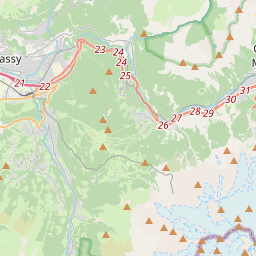
Roadside pull-off parking is available near the viewing platform on the N205 road in Servoz; spaces are limited and free but can fill quickly in summer. Please verify on the official website before you go.
How long is the hike to Cascade du Voile de la Mariée?
Roadside — no hike required. The waterfall is visible from a viewing platform directly accessible from the N205 road. Please verify on the official website before you go.
Cascade du Voile de la Mariée hike difficulty
Roadside (no hike) — accessible viewing platform right off the main road with minimal walking required. Please verify on the official website before you go.
When is the best time to visit Cascade du Voile de la Mariée?
Late spring to early summer (May–July) when snowmelt creates the most impressive flow, though the waterfall is visible year-round from the roadside. Please verify on the official website before you go.
Attractions near Cascade du Voile de la Mariée
- •Chamonix-Mont-Blanc — world-famous alpine resort town and gateway to Mont Blanc, 10 km east
- •Les Gorges de la Diosaz — dramatic gorges with walkways and waterfalls in Servoz, 2 km away
- •Cascade de l'Arpenaz — another nearby waterfall near Sallanches, visible from the road
- •Aiguille du Midi cable car — spectacular cable car to 3,842m with Mont Blanc views in Chamonix
- •Mer de Glace — largest glacier in France, accessible by historic rack railway from Chamonix
Safety information
Waterfalls can be unforgiving. Read these before you go — and please, use your judgement on the day.
Full safety guide →Questions & answers
No questions yet — be the first to ask.